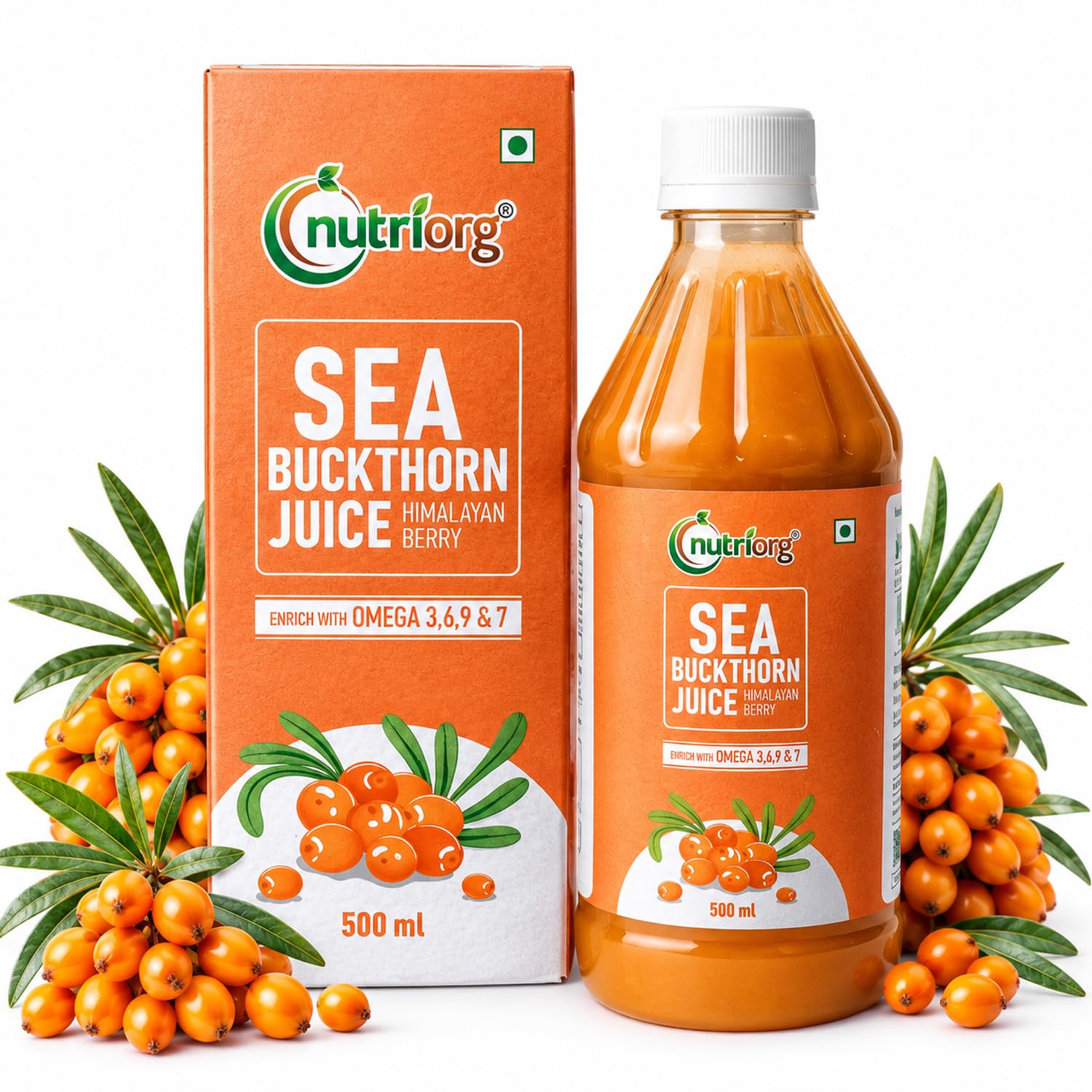
Sea buckthorn (Hippophae rhamnoides) is a nutrient-rich plant known for its bright orange berries. It grows in cold regions, including the Himalayan region, and is valued for its vitamins, fatty acids, carotenoids and other naturally occurring plant compounds.
Sea buckthorn is available in several forms, including juice, pulp, oil, capsules and skincare products. Its uses and potential benefits depend on the part of the plant used and the specific formulation.
1. Potential health benefits of sea buckthorn
1. Rich in nutrients and antioxidants
Sea buckthorn berries contain vitamin C, carotenoids, polyphenols and other plant compounds that contribute to dietary nutrition and antioxidant activity. The nutrient profile varies depending on the plant part and preparation.
2. Supports skin health
Sea buckthorn oil contains fatty acids and other compounds that may help support skin moisture and elasticity. A small clinical trial reported improvements in some skin measurements after 12 weeks of a specific sea buckthorn oil supplement; more research is needed.
3. May help with dry-eye symptoms
Some clinical studies have found that oral sea buckthorn oil may help reduce certain dry-eye symptoms. It is not a replacement for eye drops or treatment recommended by an eye-care professional.
4. Provides beneficial fatty acids
Sea buckthorn oil contains different fatty acids, including omega-3, omega-6 and omega-7. Their amounts vary depending on whether the oil comes from the fruit pulp or seeds. These fats play roles in normal bodily functions.
5. Supports a balanced diet
Sea buckthorn juice and berries can contribute flavour and plant nutrients to a varied diet. They are not a substitute for a balanced eating pattern or prescribed nutritional treatment.
6. Potential cardiovascular benefits under research
Researchers are studying sea buckthorn oil for its possible effects on cholesterol and other cardiovascular health markers. The evidence is still limited, so it should not be promoted as a treatment for high cholesterol or heart disease.
2. Common uses of sea buckthorn
Juice and beverages
Sea buckthorn juice can be consumed as a fruit beverage, often blended with other juices because its taste is naturally tart.
Oil and supplements
Sea buckthorn oils are used in some dietary supplements. Follow the product label and consult a healthcare professional if you take medication or have a medical condition.
Skincare and cosmetics
Sea buckthorn oil is used in some creams, lotions and facial oils. Choose products formulated for topical use and test a small area first.
Food and traditional preparations
Berries and other preparations are used in juices, jams, teas and regional food traditions.
3. Safety and precautions
- Sea buckthorn products can vary significantly in composition and concentration.
- Supplements may interact with medicines. Ask a healthcare professional before use, especially if you take blood-thinning or blood-pressure medication.
- If you are pregnant, breastfeeding, or preparing for surgery, seek medical advice before using concentrated supplements.
- Stop using a topical product if it causes irritation or an allergic reaction.