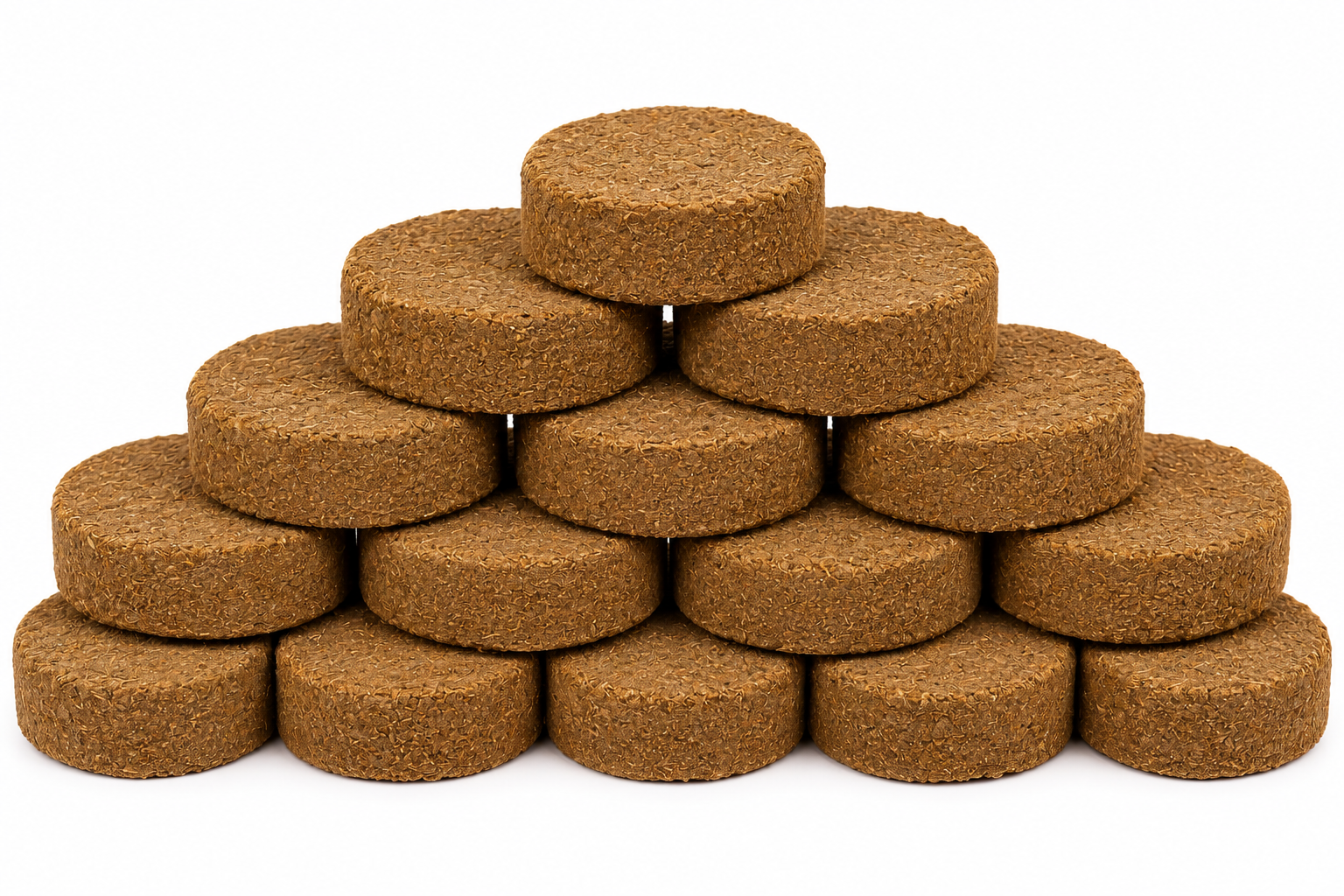
Havan, also known as Hawan or Homa, is an ancient Hindu fire ritual performed to express devotion, offer prayers, and create a sacred atmosphere. An essential part of this tradition is the selection of suitable fuel and offerings for the holy fire. Havan Cow Dung Cakes, traditionally known as Gobar Upla, are made from cow dung and are widely used as a natural fuel for havan, yajna, puja, and other religious ceremonies.
Inspired by traditional Indian practices, these cakes provide a convenient alternative to preparing loose fuel materials for religious rituals. When properly dried, they can help establish a steady fire and complement traditional havan ingredients such as ghee, herbs, resins, aromatic spices, and sacred wood.
What Are Havan Cow Dung Cakes?
Havan Cow Dung Cakes are prepared using cow dung, traditionally shaped into flat cakes and dried thoroughly before use. In Indian spiritual traditions, the cow holds a special place of reverence, and cow dung has historically been used in rural households for fuel and other customary purposes.
These cakes are valued for their traditional significance, natural origin, and suitability for rituals in which cow dung fuel is preferred. Their quality depends on the raw material, preparation method, and thorough drying.
Traditional Ingredients Used Alongside Cow Dung Cakes
A havan becomes a meaningful ritual through the combination of sacred fire, mantras, prayers, and appropriate offerings. Havan Cow Dung Cakes can be used alongside several traditional ingredients.
1. Desi Cow Ghee: Ghee is traditionally offered into the sacred fire and symbolizes purity, devotion, and selfless offering. It can also contribute to combustion when used appropriately.
2. Sandalwood (Chandan): Sandalwood is associated with serenity and devotion. Its characteristic fragrance makes it a valued ingredient in traditional worship.
3. Guggul Resin: Guggul is traditionally used in certain religious rituals for its distinctive aromatic properties.
4. Camphor (Kapoor): Camphor is commonly used in Hindu worship and symbolizes the dissolution of the ego and complete surrender to the divine.
5. Dry Coconut (Copra): Coconut represents auspiciousness, purity, and wholehearted devotion. Small pieces may be offered according to the ritual's requirements.
6. Rice (Akshat): Unbroken rice grains symbolize completeness, prosperity, and sincere prayers.
7. Cloves and Cardamom: These aromatic spices are sometimes included in havan mixtures to enrich their fragrance.
8. Traditional Herbs: Ingredients such as tulsi, nagarmotha, and other herbs may be incorporated into suitable havan samagri blends, depending on the tradition and recipe.
Benefits and Uses of Havan Cow Dung Cakes
Havan Cow Dung Cakes are traditionally appreciated for several practical and cultural reasons:
- Religious ceremonies: Suitable for use in havan, yajna, puja, and other customary Hindu rituals.
- Traditional fuel: Properly dried cakes serve as a combustible material for preparing a sacred fire.
- Convenient preparation: Pre-shaped cakes are easy to handle, store, and arrange for ritual use.
- Connection with tradition: Their use reflects longstanding Indian customs associated with indigenous cows and natural materials.
- Compatible with havan samagri: They can be used with appropriate traditional offerings, subject to the ritual's requirements.
Although havan is traditionally associated with spiritual purification and positive intentions, burning cow dung cakes and herbs produces smoke and particulate matter. Their use should not be considered a proven method of disinfecting indoor air or treating medical conditions.
How to Use Havan Cow Dung Cakes
Place a suitable quantity of thoroughly dried cakes in a designated havan kund or fire-safe vessel. Arrange them to allow adequate airflow and ignite them using an appropriate method and feel the havan samagri essence in the air.
Always perform havan in a well-ventilated area, keep children and flammable materials at a safe distance, and never leave the fire unattended. Avoid excessive smoke and follow local fire-safety requirements.
Conclusion
Havan Cow Dung Cakes represent a meaningful connection between Indian spiritual traditions and the use of traditional natural materials. When prepared carefully and used responsibly, they offer a practical fuel option for havan, yajna, and religious ceremonies. Combined with devotion, appropriate havan samagri, and safe ritual practices, they help families observe their customs with respect for tradition.